
Home » Service Areas » Charlotte, NC
Pests are part of living in the Charlotte area, but they do not have to become part of your home or business.
Superior Pest Management provides residential and commercial pest control throughout Charlotte, using a prevention-focused approach that looks beyond the pest you can see. Service can include inspection, assessment, sanitation recommendations, exclusion, targeted treatment and ongoing monitoring based on the property and the pest problem. Looking for pest control in Myers Park, Ballantyne, University City, Eastover, South Park, or Foxcroft, we can help.
Founded by David Buoniconti, Superior Pest Management brings more than 25+ years of pest management experience to properties throughout the Charlotte area. David has been licensed in the pest industry since 1997, and the company remains family-owned and locally operated.


A pest inspection should do more than confirm that a pest is present. It should help explain why the pest is there and what may allow it to return.
During a typical Charlotte-area inspection, a Superior technician may look at:
Door sweeps, garage-door seals and gaps around exterior doors
Utility penetrations for plumbing, electrical lines, cable and HVAC equipment
Foundation cracks, expansion joints and gaps around crawl-space vents
Roofline areas, soffits, fascia, attic vents and chimney flashing
Plumbing penetrations beneath sinks and around water heaters
Crawl spaces, garages, attics and other sheltered areas
Moisture around hose bibs, downspouts, irrigation systems and air-conditioning equipment
Mulch, leaf litter, firewood, dense vegetation and other conditions close to the structure
Signs of nesting, droppings, gnawing, mud tubes, grease marks, shed skins, wings or insect activity
Where the pests are being seen matters too. Activity in a kitchen may point to food, plumbing penetrations or cabinet voids. Activity near a garage may involve the door seal, stored materials or a gap where utilities enter the home. Rodent sounds in an attic may require checking roofline openings, vents and areas where branches or other structures provide access.
The findings determine whether the next step should be treatment, exclusion, sanitation changes, monitoring or a combination of those measures.
Charlotte homes vary widely. A newer home may have tight construction but still develop gaps around utility lines, garage doors or exterior penetrations. Older homes may have settled foundations, deteriorated seals, crawl-space moisture or repairs that created new openings.
Common conditions technicians encounter include:
Ant trails entering around windows, doors, garages and plumbing penetrations
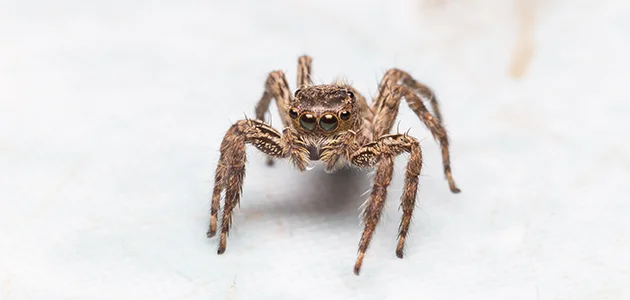
Spiders and other occasional invaders around exterior lights, eaves, porches and dense landscaping
Rodent entry points at garage corners, roof returns, crawl-space vents, plumbing penetrations and damaged screens
Moisture near crawl spaces, downspouts, hose connections and air-conditioning condensate lines
Termite-conducive conditions involving soil-to-wood contact, damp wood, mulch against the foundation or blocked inspection areas
Wasp and hornet activity beneath eaves, around rooflines, in wall voids and near outdoor structures
None of these conditions automatically means a property has an infestation. They are the details a technician evaluates when connecting visible pest activity to the structure and its surroundings.
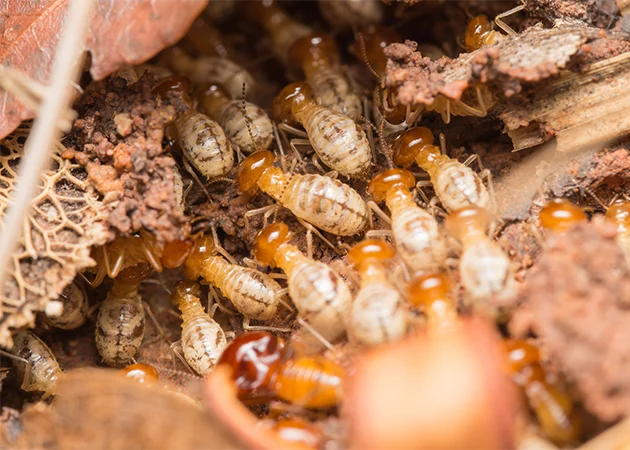
Eastern subterranean termites are found throughout North Carolina. During an inspection, technicians may look for mud tubes along foundations, crawl-space piers and plumbing penetrations, as well as damaged wood, discarded wings and conditions that keep soil or wood damp.
Crawl spaces, additions, decks, porches, plumbing leaks and areas where mulch or soil sits close to the structure often need particular attention.
If termite activity is suspected, the inspection establishes where evidence was found and whether the property needs treatment, monitoring or a longer-term protection plan.
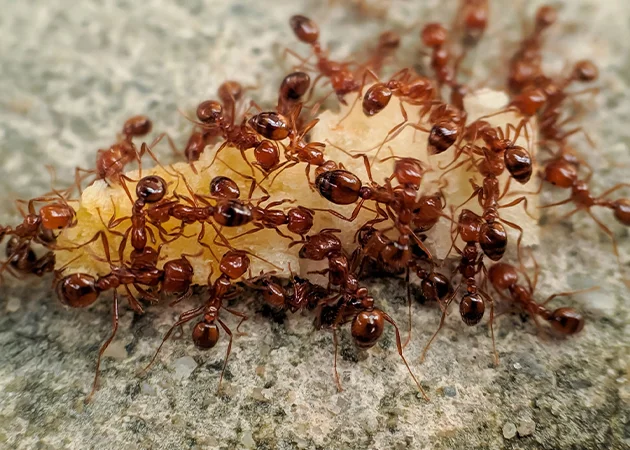
Ants are often found entering around windows, doors, garages, utility penetrations and areas where vegetation touches the structure. A visible trail may be only one part of the colony’s route.
Technicians may follow activity back toward entry points, check for moisture or damaged wood, and look for conditions such as food residue, leaking fixtures or vegetation against the exterior. Treatment is then directed at the activity and the conditions supporting it, not just the ants visible inside.
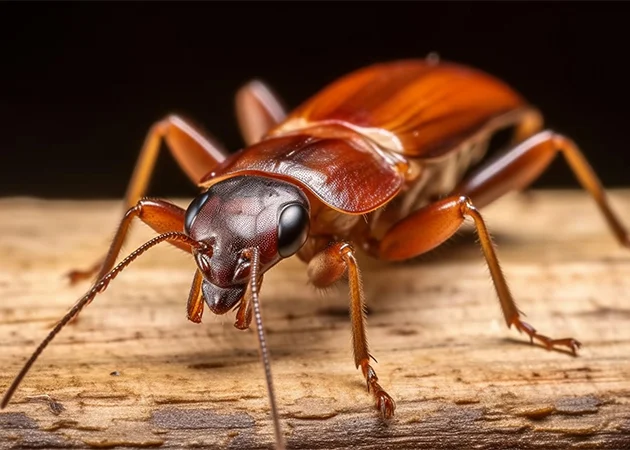
Cockroach inspections commonly focus on kitchens, bathrooms, utility rooms, garages and other areas with moisture, warmth or food sources. Technicians may check beneath sinks, around appliances, inside cabinet voids, near plumbing penetrations and in cluttered storage areas.
Treatment recommendations can include targeted applications, monitoring devices, sanitation changes and repairs to leaks or gaps. The right approach depends on the species, the level of activity and the conditions found at the property.
Mice and rats can enter through small openings, but the important question is where those openings are on a particular home.
In Charlotte properties, technicians commonly check:
Signs may include droppings, gnaw marks, nesting material, grease marks along travel routes, scratching sounds or disturbed insulation. Recommendations may include sealing entry points, correcting damaged screens, improving door seals, removing attractants and using appropriate control measures.
Treating current activity without addressing access points can leave a property vulnerable to repeat problems.
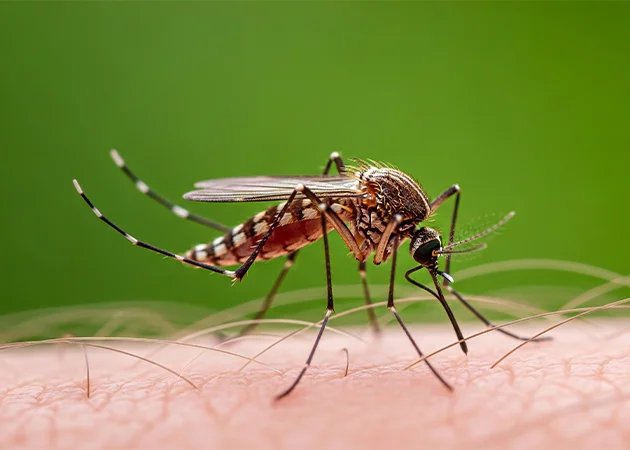
Mosquito inspections focus on the areas around the property where mosquitoes rest or reproduce. Technicians may look for standing water in containers, clogged gutters, low areas, planters, toys, tarps and other items that collect rainwater.
Vegetation, shaded areas and damp locations can also influence where mosquitoes stay during the day. Recommendations may include removing or managing standing water and adjusting conditions that support activity, along with treatment where appropriate.
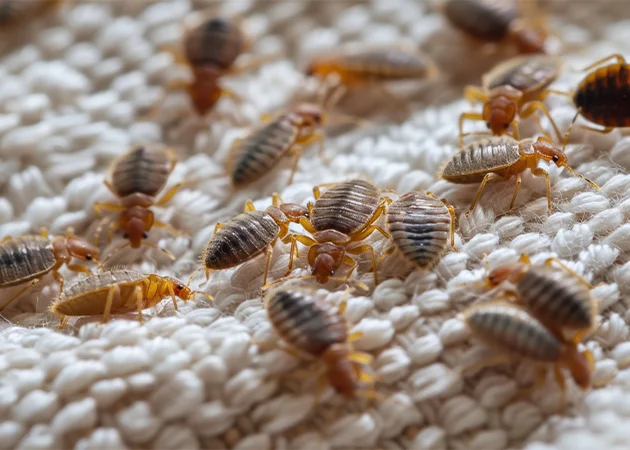
Bed bug inspections require close attention to sleeping and resting areas. Technicians may inspect mattress seams, box springs, bed frames, upholstered furniture, baseboards, cracks and nearby clutter for live insects, shed skins, eggs, spotting or other evidence.
Because bed bugs can be transported in luggage, clothing and used furniture, the inspection also considers where people sleep or sit and whether activity is limited to one room or has spread further. Treatment preparation and follow-up requirements depend on the inspection findings and the selected service plan.
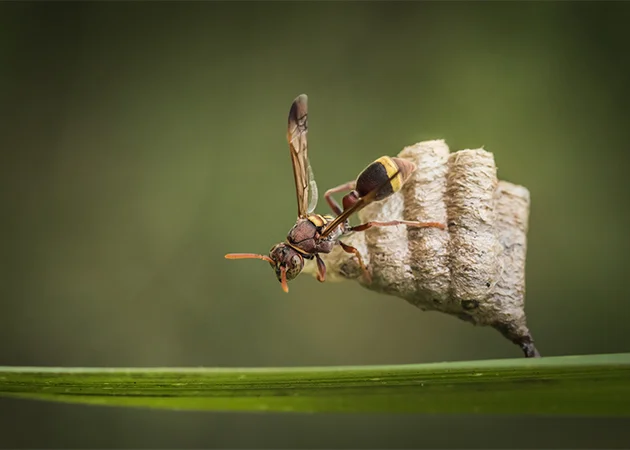
For wasps, hornets and similar pests, technicians may inspect rooflines, soffits, eaves, wall voids, porches, sheds, play areas and other locations where nests are commonly established.
Customers should avoid disturbing an active nest before service. If the nest is in a wall void or another inaccessible location, the treatment plan may need to account for where the insects are entering and exiting rather than relying on a visible nest alone.
The first appointment is meant to establish what is happening at the property and what should happen next.
A typical visit may include:
The technician asks where pests have been seen, when activity began, whether it is increasing and whether previous treatments have been attempted.
The technician examines interior and exterior areas connected to the pest activity, including likely entry points, moisture sources, nesting locations and harbourage areas.
The technician looks for physical signs such as droppings, trails, mud tubes, damage, nests, shed skins, wings or live activity.
Customers should be told what was found, what was not found and which conditions may be contributing to the problem.
Depending on the pest and property, this may involve treatment, exclusion, sanitation changes, monitoring or recurring service.
Some services require customers to move items, clean specific areas, secure food, keep people or pets away from treated locations or complete other preparation steps.
The exact process varies by pest. A termite inspection, a rodent exclusion assessment and a bed bug inspection are not the same appointment.
For rodents, customers may be asked to identify sounds, droppings or damaged materials. For bed bugs, preparation can be more extensive and should follow the technician’s instructions rather than general internet advice.
Superior Pest Management provides pest management for both homes and businesses throughout Charlotte.

Residential service is based on the conditions at the property and the pest affecting it. Depending on the situation, service may include interior and exterior treatment, sanitation recommendations, exclusion work and ongoing monitoring.
The objective is not simply to treat the room where a pest was seen. It is to understand how the pest is using the property and what changes may reduce the chance of continued activity.

Commercial inspections may include kitchens, receiving areas, storage rooms, waste areas, employee spaces, exterior walls, loading docks and other locations relevant to the business. A commercial plan can incorporate regular monitoring, sanitation recommendations, exclusion and targeted treatments. Service frequency and documentation should reflect the property's pest pressure, operating conditions and customer requirements. Superior Pest Management works with restaurants and food-service properties, retail locations, offices, warehouses and distribution facilities.
Recurring pest control is not simply the same treatment repeated on a calendar.
A useful recurring service gives technicians the chance to compare current conditions with previous visits. That can include:
Superior Pest Management uses Integrated Pest Management (IPM) principles as part of its approach.
We look for pest activity, entry points, nesting areas, moisture and conditions that may be contributing to the problem.
We identify the pest and evaluate the property so the treatment approach matches the situation.
Where appropriate, we provide recommendations for reducing food, water, shelter and other conditions that can support pest activity.
Where appropriate, we identify gaps, damaged seals, screens and other access points that may need repair or sealing.
Our trained technicians apply appropriate treatments to the areas where pests are active or entering the property.
For ongoing services, monitoring helps identify changes in pest activity and whether additional attention is needed.
This process is more useful than treating the spot where a pest was seen and assuming the problem is solved.

Superior Pest Management has more than 25 years of experience serving homes and businesses throughout the region. Founder David Buoniconti has been licensed in the pest industry since 1997.

Superior Pest Management was founded by David and Jolene Buoniconti with a focus on service and quality. The company continues to serve customers throughout the Charlotte and wider Metrolina area as a locally operated business.

Technicians receive national, state and in-house training, helping them identify pest activity and select appropriate treatment methods for different properties.

A customer should not have to guess what a technician found or why a treatment was recommended. Superior's service emphasizes explaining the inspection findings, recommended work and next steps in terms customers can understand.

Our service considers the conditions that allow pest problems to develop, which can include inspection, sanitation recommendations, exclusion, targeted treatment and monitoring.

Pest control products are selected and applied responsibly with families, pets and property in mind. Customers receive instructions about treated areas and any precautions that apply to the service performed.

For some Charlotte-area customers, pest management is not a one-time service.
"Professional, timely, thorough and friendly. Superior Pest Management has provided services to my family for 15 years, and have always done a thorough and professional job." — Sharon Willis, Superior Pest Management customer
A long-term customer relationship depends on consistent service, communication and attention to changing conditions at the property.
*Restrictions apply and must mention the website to qualify for offer
Expires: 11/30/2026
Customers also mention the value of clear communication during inspections and service visits.
One Charlotte-area customer, Imari Stanford, specifically highlighted how clearly James explained the inspection process and made sure the services were easy to understand.
That matters most when the recommended solution involves more than a single treatment. Customers should understand what was found, what they need to do before or after service and what signs should prompt a follow-up.
Posted on Google![]()
Brigette ChagnonTrustindex verifies that the original source of the review is Google.
I'm leaving this review for Sam Marin, the Pest Control Technician who came to my home for a Yellowjacket nest in the ground and roaches. He was very knowledgeable about the best way to handle the Yellowjacket nest and asked me specific questions to determine what type of roaches we've seen in the house. He was also very professional and considerate about coming in and out of the kitchen door, and I really appreciated that. I highly recommend Sam!Posted on Google![]()
Chophouse 101Trustindex verifies that the original source of the review is Google.
Sam is great! If you ever need someone to come out and explain exactly what they are doing and why, he is they guy you want. We liked understanding exactly why and where things needed to be done.Posted on Google![]()
Dayton McLeanTrustindex verifies that the original source of the review is Google.
We had a nest of yellow jackets make their home behind the siding of our home. I called Superior Pest Control and they worked me into their schedule for the next day. Don arrived right on time, evaluated situation and took care of the yellow jackets. He explained what he was doing and went extra mile to do some preventive spraying. Great Job. I would recommend Superior Pest without reversation. Very affordable also! Thank you.Posted on Google![]()
Codee AndersonTrustindex verifies that the original source of the review is Google.
Will was very professional and courteous. He made sure his job was completed fully and accurately.Posted on Google![]()
Douglas CavinessTrustindex verifies that the original source of the review is Google.
James took great care of the ant problem I was having, quickly and he was super helpful and kind.Posted on Google![]()
Bobby CornellTrustindex verifies that the original source of the review is Google.
William Collins does an exceptional job. Appreciate his professionalism.Posted on Google![]()
James JordanTrustindex verifies that the original source of the review is Google.
James took care of our pest control thoroughly and even did a complimentary termite inspection.Posted on Google![]()
Kordell NorfleetTrustindex verifies that the original source of the review is Google.
William does great work!Posted on Google![]()
Monique WilliamsTrustindex verifies that the original source of the review is Google.
I highly recommend Superior Pest Management! William recently serviced my home and provided exceptional service. He was very knowledgeable, taking the time to explain everything, and handled the job incredibly fast. I really appreciate the efficiency and professionalism. I’m glad to have found a company I can trust and will absolutely be using them again!Posted on Google![]()
Jeffrey BarnettTrustindex verifies that the original source of the review is Google.
Great family owned company. Don’s been servicing my home for 4 years now and he’s top notch!
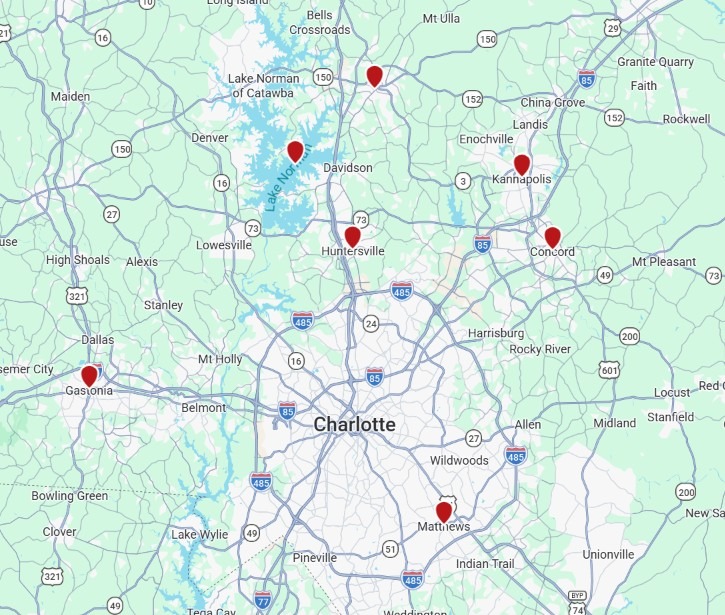
Charlotte is at the centre of a much wider service area for Superior Pest Management. Our team also serves communities throughout the surrounding Metrolina region.
For customers outside Charlotte, dedicated local pages are available for several nearby communities, including:
Whether you are dealing with an active infestation or want to prevent recurring pest problems, Superior Pest Management can inspect your property and explain the appropriate next step.
Get straightforward pest management from a locally operated company with 25+ years of experience serving the Charlotte area.
Ants, termites, cockroaches, rodents, mosquitoes, spiders, bed bugs and stinging insects are the pests we see most often in the Charlotte area. Which ones show up at a given property depends on factors like the age and construction of the building, nearby landscaping, moisture conditions and the time of year. For example, ants and mosquitoes tend to pick up in warmer months, while rodents often become more noticeable in fall and winter as they look for shelter indoors.
It depends on the pest you’re dealing with, but a typical inspection covers likely entry points, crawl spaces, attics, garages, plumbing penetrations, roofline areas, moisture sources and landscaping close to the structure. Technicians also pay close attention to wherever you’ve personally noticed activity, since that’s often the fastest way to trace a problem back to its source.
The most common entry points are garage-door seals, crawl-space vents, roofline openings, attic vents, utility penetrations, damaged screens, gaps around siding and openings beneath exterior trim. The right fix depends on the size and location of the opening. A gap sealed with the wrong material, or one that’s missed entirely, can leave the property just as vulnerable as before.
Make the affected areas accessible, secure pets, and remove food from treatment areas if you’re asked to. It also helps to have notes on when and where you’ve seen activity, since specific details speed up the inspection. Preparation requirements vary quite a bit by service, so always follow the instructions given for your appointment, particularly for bed bug treatments, which tend to require more extensive prep than other services.
There isn’t a single schedule that fits every property. The right frequency depends on the pest involved, the property’s conditions, any history of past activity and the type of service being performed. Some situations call for a one-time treatment, while others benefit from a recurring plan that lets a technician track conditions over time. A pest professional can recommend a schedule after seeing the property firsthand.
It can, depending on the pest and the service plan. Many pest problems originate outdoors, so exterior treatment or exclusion work is often just as important as anything done inside. What actually gets treated is determined by the inspection and where the activity is found, not a fixed formula applied to every property.
Pest control products are applied according to their labels with occupants in mind, and we take families, pets and the property itself into account when selecting a treatment method. That said, some services do call for specific precautions, like keeping people or pets out of a treated area for a set period, so always follow the instructions given for your particular service.
Yes. We work with restaurants and food-service properties, retail locations, offices, warehouses and distribution facilities. Commercial service can include regular monitoring, sanitation recommendations, exclusion work and targeted treatments, with the frequency and documentation shaped by the property’s pest pressure and operating requirements.
Reach out for a reassessment, and try to note where and when you’re still seeing activity beforehand. Continued activity after treatment usually points to something specific: an entry point that wasn’t fully sealed, a moisture source that wasn’t addressed, a harbourage area that was missed, a different pest than originally identified, or simply a treatment plan that needs adjusting. A follow-up inspection is the fastest way to figure out which of these is the cause.