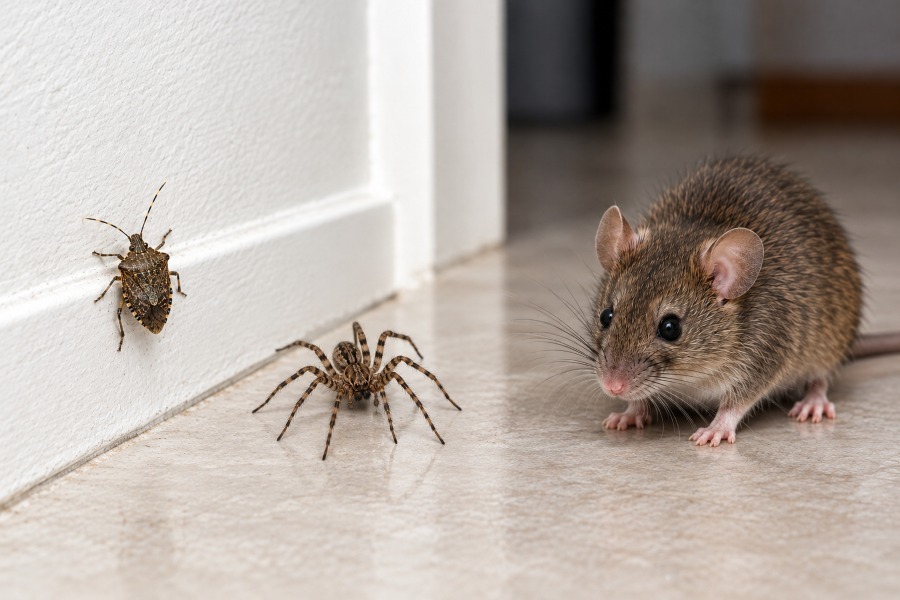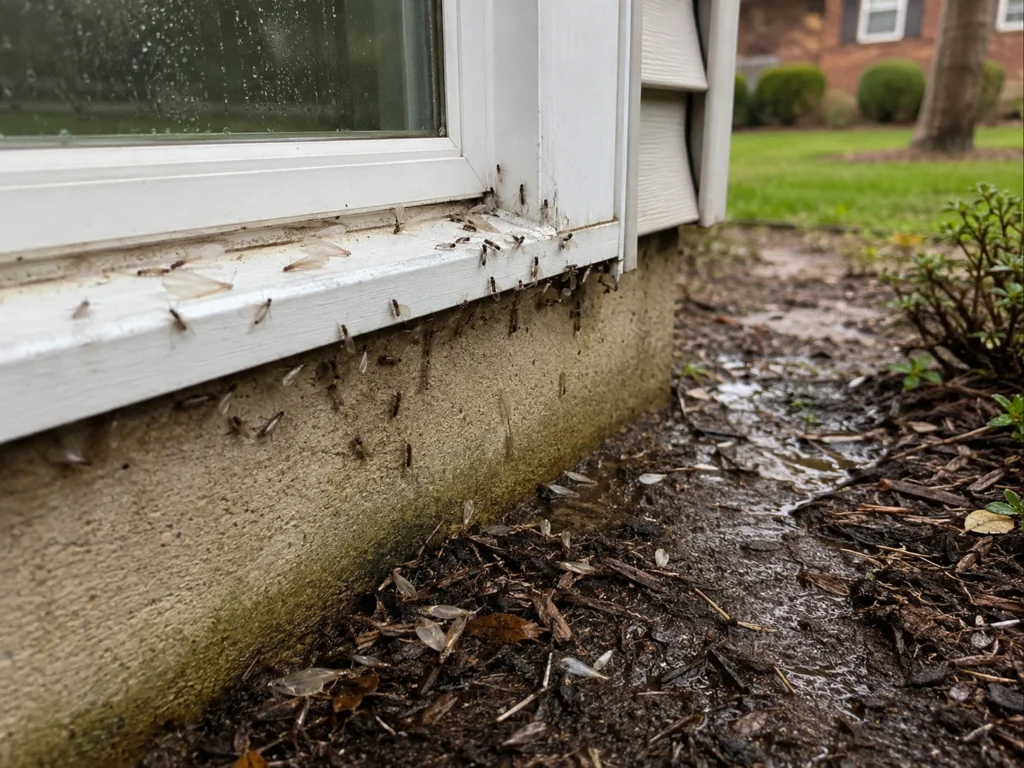
Charlotte does not have to be freezing before pests start looking for shelter. As nights cool in early fall, insects and rodents begin using buildings differently. Some move toward protected places to overwinter. Others take advantage of warmth, food, moisture, or undisturbed space.
Brown marmorated stink bugs are a familiar example in North Carolina. NC State Extension reports that adults begin dispersing to overwintering sites in mid-September and October, often gathering on the outside of buildings before moving into sheltered areas.
A home can look well sealed and still have openings around doors, vents, utility lines, siding, and the roofline. These seven routes deserve a close look before cooler weather settles in.
1. Worn Door Sweeps and Garage-Door Gaps
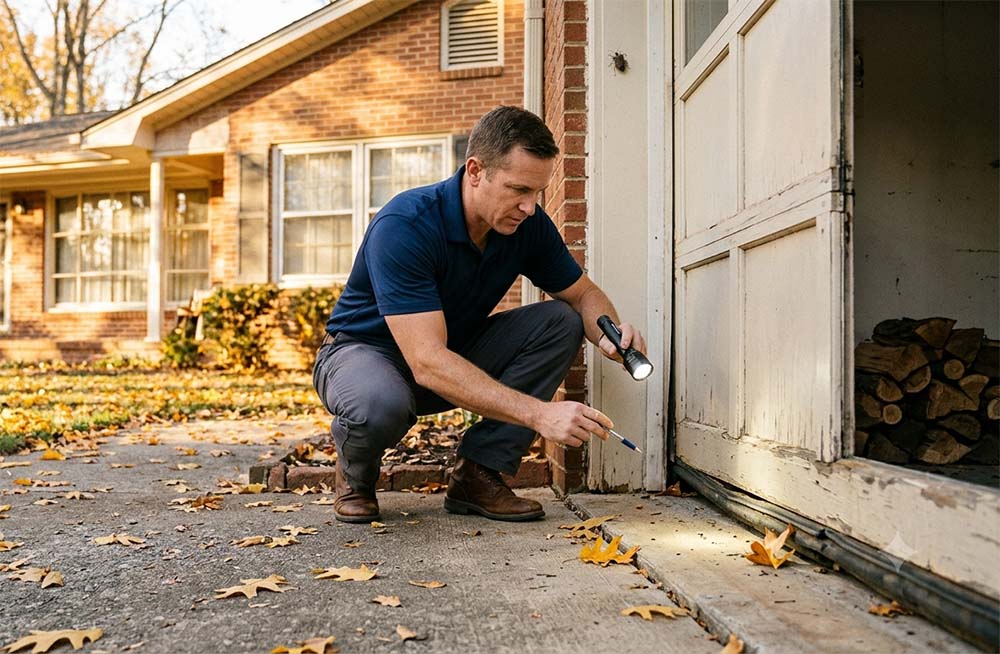
Start with the doors you use every day. A worn sweep under a back door can leave a narrow gap along the threshold. Garage doors often develop openings at the bottom corners, especially where the seal has hardened, torn, or no longer sits flat.
Mice, camel crickets, spiders, and other crawling pests can use these low openings. Check exterior doors from inside during daylight. If you can see light under the door or at the corners, the seal is no longer doing its job.
2. Loose Screens and Gaps Around Window Frames
A torn screen is obvious. Smaller defects around the frame are easier to miss.
Caulk can shrink or separate where a window frame meets brick, siding, or trim. Screens can pull away slightly at the corners, and window-mounted equipment may leave narrow spaces around its edges.
Fall-invading insects can use those openings. Stink bugs are especially relevant in the North Carolina Piedmont because adults seek dry, protected places for winter. Repair damaged screens and examine the entire window perimeter.
3. Foundation Cracks and Joints Between Building Materials
Walk the foundation slowly. Small cracks in masonry, missing mortar, and gaps where siding meets the foundation can lead into crawlspaces, wall cavities, or basements.
Pay attention to places where two materials meet. Brick against siding, concrete against trim, and additions joined to the original structure can develop narrow seams as materials age and move.
Ground-level openings can admit rodents and crawling pests, particularly where mulch, leaf litter, or stored items provide cover close to the wall.
4. Openings Around Pipes, Cables, and HVAC Lines
Every pipe or cable that passes through an exterior wall required a hole during construction or installation. The opening may be larger than the line running through it.
Check where air-conditioning lines enter the house, along with plumbing, electrical conduit, cable lines, outdoor faucets, and dryer vents. Indoors, inspect beneath sinks where pipes pass through walls or floors.
These penetrations can lead directly into wall voids or other protected spaces. If indoor activity keeps returning, professional pest control can help identify access points that are difficult to see from the living area.
5. Soffits, Fascia, Attic Vents, and Roofline Gaps
Pest inspections should not stop at eye level. Loose soffit panels, damaged fascia, unscreened vents, and gaps around roof intersections can provide access to attics and upper wall cavities.
Stink bugs frequently settle in protected parts of buildings. Rodents can also reach roof-level openings by climbing trees or exterior surfaces.
From the ground, look for shifted soffit panels, damaged vent screens, separated trim, and openings where roof sections meet. When pests keep returning, pest control in Charlotte, NC should include checking these upper-level access points rather than treating only the room where pests appear.
6. Crawlspace Doors, Vents, and Mechanical Penetrations
Crawlspaces offer darkness, shelter, plumbing penetrations, and sometimes excess moisture.
A crawlspace door that does not close tightly can leave room for insects or rodents. Damaged vent screens create another route. Openings around plumbing, ductwork, wiring, and condensate lines deserve the same attention as utility penetrations above ground.
Camel crickets commonly turn up in cool, damp spaces such as crawlspaces, garages, and basements. For recurring activity below the floor, pest control services should address both the pest and the conditions supporting it.
7. Firewood, Boxes, and Outdoor Items Carried Inside
Some pests come indoors with something else.
Firewood can shelter insects and spiders. Cardboard boxes stored in garages or sheds may provide hiding places. Holiday decorations, patio cushions, planters, and garden equipment can sit undisturbed outdoors before being carried into the house.
Inspect these items first. Keep firewood outside until it is needed rather than storing a large supply indoors, and avoid stacking it directly against the house.
What to Check Before Cooler Weather Settles In
Begin at the foundation and work upward. Check exterior doors, garage seals, windows, utility penetrations, crawlspace access, vents, soffits, and the roofline. Indoors, look beneath sinks and around utility rooms for gaps where pipes or wiring enter walls.
Sealing visible openings can reduce access, but recurring activity may point to entry points that are hidden or difficult to reach. Superior Pest Management provides Charlotte-area pest control with inspections that look for pest activity, entry points, moisture, damaged seals, screens, and other conditions that may contribute to the problem.
If pests are already showing up inside, contact Superior Pest Management to schedule an inspection and get a plan based on your home and the pest involved.
FAQs
Why do pests come inside when the weather gets cooler in Charlotte?
Some insects move toward protected overwintering sites as temperatures fall. Rodents and other pests may also enter buildings for shelter, food, water, or nesting space. Seasonal movement often makes existing gaps around a home more noticeable.
How small of an opening can a mouse use?
Mice can squeeze through very small gaps, so openings around doors, utility lines, foundations, and vents deserve attention even when they do not look large.
Where should I check first for pest entry points?
Start with exterior doors and the garage, then inspect window frames, foundation joints, utility penetrations, crawlspace openings, attic vents, soffits, and roofline gaps.
Should I seal pest entry points myself?
Simple repairs such as replacing a damaged door sweep or screen may be straightforward. Larger openings, active rodent problems, roofline gaps, or repeated indoor pest activity may require professional inspection and exclusion work.
What pests commonly move into Charlotte homes during fall?
Homeowners may encounter stink bugs, rodents, camel crickets, spiders, and other insects using sheltered parts of a structure. The species present will depend on the property, nearby habitat, moisture, and available entry points.