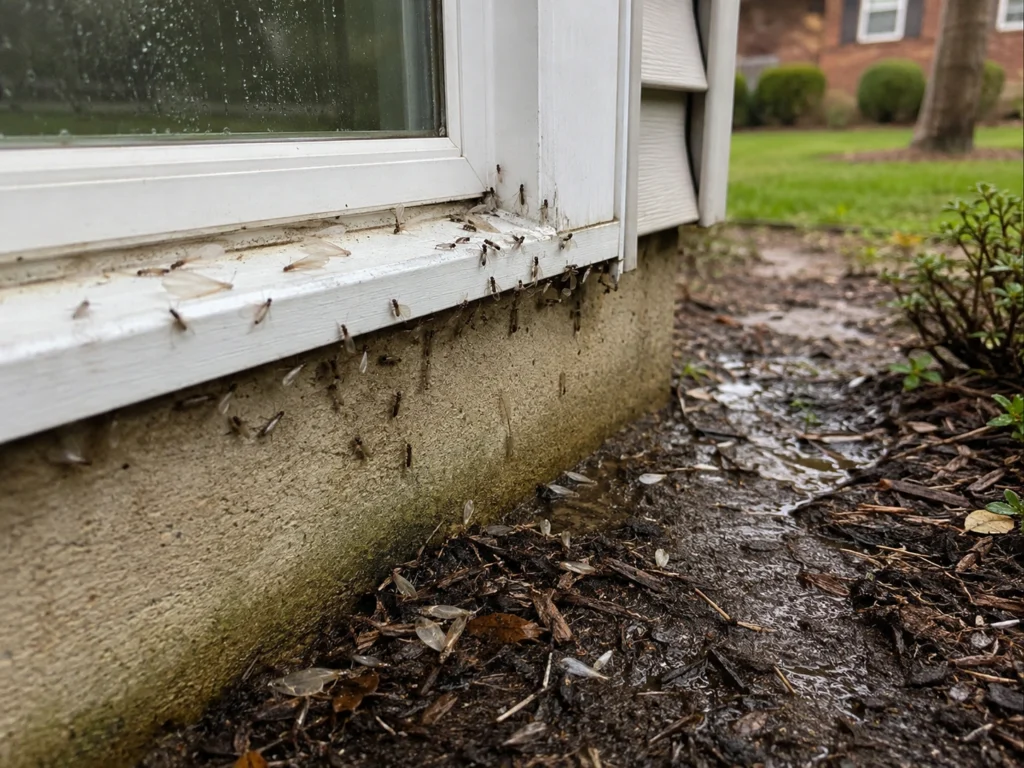
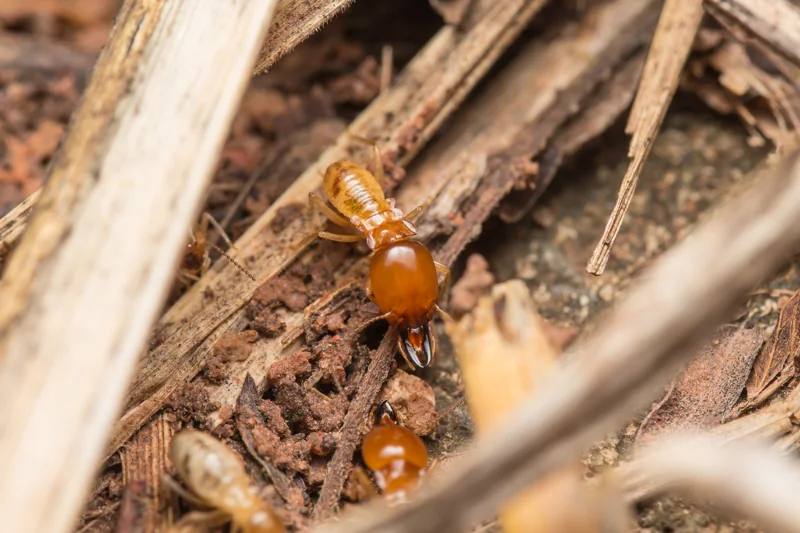
Charlotte summers bring heat, humidity, and frequent rain. Those conditions can make termite activity easier to notice around foundations and crawl spaces. Subterranean termites live in soil and feed on wood. NC State Extension warns that North Carolina property owners are very likely to encounter eastern subterranean termites.
Termites rarely announce themselves. More often, they leave small clues: a dirt tube on a foundation wall, wings near a window, or trim that suddenly feels soft. Recognizing these signs helps protect the house before damage spreads.
Why Termites Are a Summer Concern in Charlotte
Termites stay active when moisture and food exist. Rain keeps soil damp, clogged gutters may push water toward the home, and mulch can hold moisture near exterior walls.
Watch these areas closely:
- Crawl spaces with poor airflow
- Wood close to soil
- Deck posts and porch steps
- Firewood near the house
- Leaky hose bibs or downspouts
- Mulch against siding
Common Termite Warning Signs
A slow walk around the home can reveal useful signs.
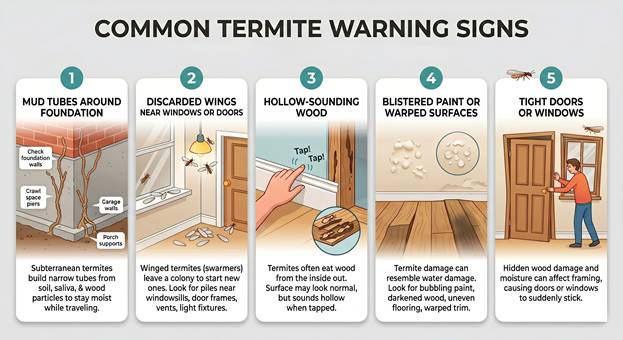
- Mud tubes around the foundation: Subterranean termites build narrow tubes from soil, saliva, and wood particles to stay moist while traveling. Check foundation walls, crawl space piers, garage walls, and porch supports. Mississippi State Extension lists mud shelter tubes on foundations as a common sign of termite infestation.
- Discarded wings near windows or doors: Winged termites, also called swarmers, leave a colony to start new ones. Small piles of equal-sized wings near windowsills, door frames, vents, or light fixtures deserve attention. Swarmers often come from underground nests, and indoor swarmers need attention.
- Hollow-sounding wood: Termites often eat wood from the inside out. A baseboard, window sill, door frame, or exposed beam may look normal on the surface but sound hollow when tapped.
- Blistered paint or warped surfaces: Termite damage can look like water damage. Bubbling paint, darkened wood, uneven flooring, and warped trim may point to moisture, pest activity, or both.
- Tight doors or windows: Hidden wood damage and moisture can affect framing. A door that suddenly sticks does not prove termites are present, but it belongs on the checklist.
Where Charlotte Homeowners Should Check First
Start outside, then move inward. Focus on:
- Foundation walls
- Crawl space entrances
- Garage corners
- Porch steps and deck posts
- Window sills and door trim
- Wood piles, stumps, and sheds
- Mulch beds near the home
Check again after summer rain, when damp soil and soft wood are easier to spot.
Termites or Flying Ants?
Many homeowners confuse termite swarmers with flying ants. Identification matters because treatment depends on the pest.
| Feature | Termite Swarmer | Flying Ant |
| Antennae | Straight | Bent |
| Waist | Broad | Narrow |
| Wings | Similar size | Front wings larger |
| Body shape | More uniform | Segmented |
If you are unsure, save a sample, take clear photos, and contact a professional. Termite control often requires knowledge of termite behavior and treatment methods.
What to Do If You Notice Warning Signs
Do not wait for obvious damage and opt for pest control in Charlotte NC at the right time. Termites can work behind walls before signs become easy to see.
Take these steps:
- Photograph mud tubes, wings, damaged wood, or swarmers.
- Avoid tearing out wood before an inspection.
- Skip surface sprays as the main fix.
- Reduce moisture by repairing leaks and clearing gutters.
- Move firewood, lumber, and cardboard away from the house.
- Schedule a professional termite inspection.
Why Professional Help Matters
A trained technician checks entry points, crawl spaces, wood-to-soil contact, moisture-prone areas, and visible damage patterns.
The National Pesticide Information Center states that termite control often requires specific knowledge, and some termiticides may only be used by trained, licensed professionals.
A proper inspection can show whether activity appears active or old, where the structure is at risk, whether treatment or monitoring is needed, and how to reduce conditions that attract termites.
If termite signs appear during summer, contacting pest control services in Charlotte NCcan help homeowners act before the problem spreads.
Beyond Termites – More Pest Prevention During Summer
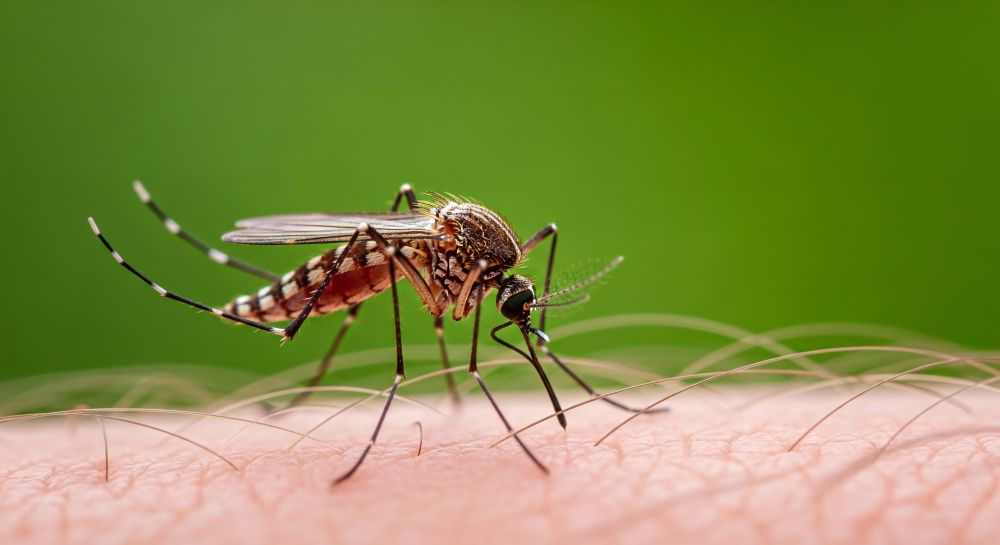
Termites are only one part of Charlotte’s summer pest pressure. Mosquitoes, ants, wasps, spiders, and roaches may also become more noticeable as heat and humidity rise. While termite treatment requires its own inspection, broader seasonal service like mosquito treatment in Charlotte can help reduce pest activity.
Mosquito control in Charlotte NC might be a necessity when planning cookouts or evenings on the porch.
Also Read: The Need for Real Estate Pest Inspection
When to Call Superior Pest Management
Call for help when you see mud tubes, discarded wings, soft wood, or flying insects indoors. Schedule an inspection when buying a home, renovating an older property, or noticing foundation moisture.
Superior Pest Management serves Charlotte homeowners who want practical answers, not guesswork. If you suspect termites or need same day pest control, reach out to schedule service and get clear next steps for protecting your home this summer.
Frequently Asked Questions:
What are the first signs of termites in a Charlotte home?
Early signs include mud tubes, discarded wings, hollow-sounding wood, soft trim, bubbling paint, and swarmers near windows or doors inside. One sign may not tell the whole story, but several signs together deserve a professional inspection.
Are termites active in Charlotte during summer?
Yes. Termites can be active in warm, moist conditions, and Charlotte summers often bring humidity and rain. Activity may be easier to notice around foundations, crawl spaces, decks, mulch beds, and damp wood.
Should I remove termite mud tubes?
Do not remove them before documenting the area. Take photos and call a professional. Mud tubes can help a technician identify activity, entry points, and likely travel paths.
Can I treat termites myself?
DIY products may kill visible insects, but they often miss the colony. Termites usually require proper identification, inspection, and a treatment plan suited to the structure. Always talk to a professional for termite or mosquito treatment in Charlotte.
How often should Charlotte homeowners check for termites?
Homeowners should look for signs during seasonal maintenance and after heavy rain. A yearly professional inspection is a smart habit, especially for homes with crawl spaces, drainage problems, moisture issues, older wood framing, or past nearby termite activity or repairs. Search termite control or mosquito control near me to get started.
Learn more about Superior Pest Management in Kannapolis, NC.