Termite swarm season in North Carolina is most noticeable from spring through late summer, although warm weather can bring swarmers out earlier or keep them active into fall. For many homeowners, the first sign is a cluster of winged insects near a window, door, porch light, foundation, or tree stump.
The timing matters, but so does the location. Termite swarmers outdoors do not automatically mean a house is infested. Swarmers emerging inside, however, can point to a mature colony within or beneath the structure. Knowing what to look for helps homeowners respond promptly without assuming the worst.
When Do Termites Swarm in NC?
There is no single date that marks the start of termite swarming season. Temperature, rainfall, humidity, species, and colony maturity all influence when a swarm occurs.
According to NC State Extension, eastern subterranean termites in North Carolina typically swarm on warm days from late spring through late summer, often after recent rain. Swarming can also occur in early spring during unusually warm weather or later in fall when conditions remain favorable.
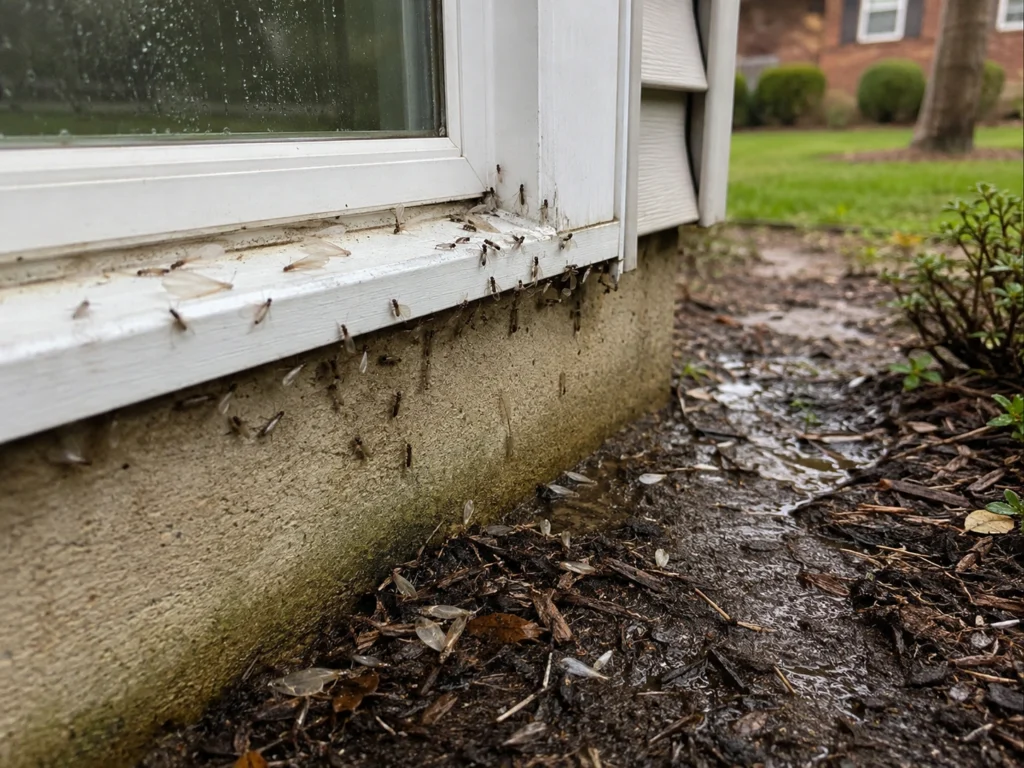
North Carolina homeowners should be especially alert from March through September. A mild winter may produce earlier activity, while a cooler spring may delay it. Swarms are often brief, which is why a homeowner may find only discarded wings rather than the insects.
Termites do not become active only during swarm season. Worker termites can continue feeding and moving through soil, mud tubes, and concealed wood when no winged termites are visible. A swarm is a reproductive event, not the beginning of colony activity.
Why Warm Weather and Rain Trigger Swarms
A mature subterranean termite colony produces winged reproductive termites called alates, commonly known as termite swarmers. They leave the established colony, pair with a mate, shed their wings, and attempt to create a new colony.
Warm temperatures support flight, while moist soil improves the chance that paired termites will survive after landing. That is why swarms are frequently noticed after rain followed by a warm day.
North Carolina’s humidity, rainfall, crawl spaces, and soil contact create favorable conditions for subterranean termites. Homes with moisture problems, wood-to-soil contact, or wood debris near the foundation may face greater risk.
Does a Termite Swarm Mean Your House Is Infested?
The answer depends largely on where the swarmers were found.
A swarm near a stump, fallen branch, fence, landscape timber, or wooded section of the yard confirms that termites are present nearby. It does not prove that they are feeding on the home. Outdoor activity should be treated as a reminder to maintain regular inspections and correct conditions that attract termites.
An indoor swarm is more concerning. Termite swarmers gathering near windows, doors, vents, or light fixtures may have emerged through a wall, floor, crawl space, or foundation opening. Piles of loose wings on a sill can also indicate recent activity.
Homeowners who find insects indoors should photograph them and save several specimens in a sealed container. Note the room, date, and location. Avoid spraying the visible insects and assuming the problem is solved. Surface sprays may kill swarmers without reaching the colony that produced them.
A professional termite inspection in Kannapolis, NC can help determine whether the insects are termites, where they may have emerged, and whether treatment is needed.
Termite Swarmers or Flying Ants?
Termite swarmers are often mistaken for flying ants. The two insects can appear at the same time of year, but their body shapes are different.
Termite swarmers have straight antennae, a broad waist, and four wings of roughly equal length. Flying ants have bent antennae, a narrow waist, and front wings that are longer than the rear wings. Termite wings also detach easily, leaving small piles around windows and doors.
Accurate identification matters because ants and termites require different treatment strategies. Homeowners can review these termite warning signs Charlotte homeowners should know, including mud tubes, damaged wood, discarded wings, and other evidence of activity.
What to Do During Termite Swarm Season
Homeowners can take several practical steps when termite swarming season begins:
- Document the activity. Photograph the insects, wings, and the area where they appeared.
- Keep a sample. A specimen can help a professional distinguish termites from flying ants.
- Check common entry areas. Look near foundation walls, crawl space openings, garage edges, porch supports, windows, plumbing penetrations, and utility lines.
- Look for mud tubes. Subterranean termites build narrow, soil-colored tubes that protect them as they travel.
- Reduce moisture. Repair leaks, improve drainage, clean gutters, and address damp crawl space conditions.
- Remove food sources. Keep firewood, cardboard, lumber, stumps, and wood debris away from the foundation.
- Schedule an inspection. Indoor swarmers, mud tubes, recurring activity near the house, or suspected wood damage deserve professional attention.
These measures can reduce risk, but they cannot confirm whether a hidden colony is present. A trained inspector can evaluate accessible wood, foundation areas, crawl spaces, moisture conditions, and other locations where termite activity may be concealed.
Why an Inspection Matters After the Swarm Ends
Termite swarmers may disappear quickly, but the original colony does not. Workers remain hidden as they search for wood and other cellulose materials. A house can have termite activity without a visible swarm, and a completed swarm does not mean the threat has passed.
Professional termite control in Charlotte, NC begins with identification and an assessment of the structure. Depending on construction, activity, and surrounding conditions, a treatment plan may include a liquid soil treatment, termite baiting system, wood-applied product, or ongoing monitoring.
The goal is not simply to remove insects from a window. It is to determine whether a colony has reached the structure and choose a treatment suited to the property.
Schedule a North Carolina Termite Inspection
Termite swarm season in North Carolina is a useful warning period. Warm weather and rain can make hidden colonies visible, sometimes for only a short time. Outdoor swarmers may come from a nearby natural source, but indoor swarmers or discarded wings should not be ignored.
Superior Pest Management helps homeowners in Kannapolis, Charlotte, Concord, Lake Norman, and surrounding communities identify termite activity and select an appropriate response. Our technicians inspect for visible evidence, evaluate conditions around the property, and explain treatment or prevention options clearly.
If you have found winged insects, discarded wings, mud tubes, or suspicious wood damage, schedule a professional termite inspection with Superior Pest Management.